

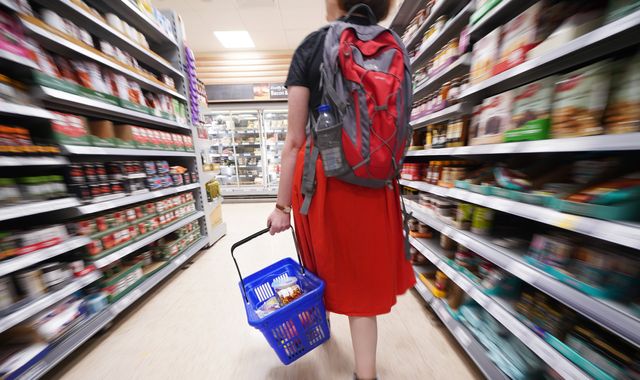
UK food prices by November could be 50% higher than they were at the start of the cost-of-living crisis five years ago, analysts have said.
Figures from the Energy and Climate Intelligence Unit (ECIU) suggest the growth in food costs since mid-2021 may match that over the nearly 20 years before the crisis began - meaning the rate of food inflation would have almost quadrupled.
Extreme weather driven by climate change, global supply disruptions, and continued exposure to volatile oil and gas markets have compounded pressures on the food system, with households facing sustained increases at the checkout.
Pasta (+50%) is one of the products the price of which has already seen some of the sharpest rises, along with other staples such as frozen vegetables (+55%), chocolate (+58%), eggs (+59%), beef (+64%) and olive oil (+113%).
This illustrates their sensitivity to volatile oil and gas prices, synthetic fertiliser costs, and climate impacts such as droughts, floods, and heatwaves, both in the UK and in key import regions, Monday's research said.
Household food bills rose by an average of £605 over 2022 and 2023, with energy shocks accounting for £244 of this, the study found.
The continued pressure on food inflation has been partly driven by five climate-impacted foods - butter, milk, beef, chocolate and coffee - which have risen over four times faster than other food and drink.
Chris Jaccarini, ECIU food and farming analyst, said the Iran war will make things worse, while "scientists are predicting 2027 to be the hottest year on record".
He said that could hardly come at a worse time, as "three of England's worst harvests on record have been in the past five years.
"Unless we get to net zero emissions to stop climate change and bring balance to the system, food prices will spiral ever further."
Read more on Sky News:
Thousands to benefit from cancer jab
How to write a James Bond song
Football legend taken to hospital
Researchers said the projected 50% increase means that many households will continue to feel the strain well beyond the initial phase of the cost-of-living crisis, with food remaining one of the most visible and unavoidable expenses.
Adjusting for average salaries, food prices have risen by 11% since the crisis began, compounding rises in other essential household costs such as energy (+36%), water (+25%), and insurance (+19%).
Food price rises are felt more keenly than those in other areas because food costs are hard to avoid, intensifying the squeeze on disposable incomes, leaving food spending as one of the few areas where people struggle to reduce their outlay.
Lower-income households are expected to feel the pinch more than others, as they spend a larger share of their income on food and are less able to absorb price shocks, the ECIU said.
In families on the lowest incomes, food price inflation means "people skip meals, children go hungry, and diet-related illness rises," Anna Taylor, executive director of the Food Foundation, said.
Sky News has approached the Department for Environment, Food and Rural Affairs for comment.

(c) Sky News 2026: Food price inflation still rising, as lower income households feel the squeeze, study says
 Local news content from CItiblog - read more at
  King 'delighted' as Princess Eugenie announces she is expecting her third child
 Woman and man die in Bristol explosion after 'domestic-related incident'
 Peter Kay show bomb hoax suspect removed from court after outbursts during hearing
 'Beautiful streaks': Eta Aquariids meteor shower to light up skies over Britain
 Why you should never book a holiday on a Tuesday | Money newsletter