

If you've ever spent your morning commute daydreaming about starting afresh with your career, this feature is for you.
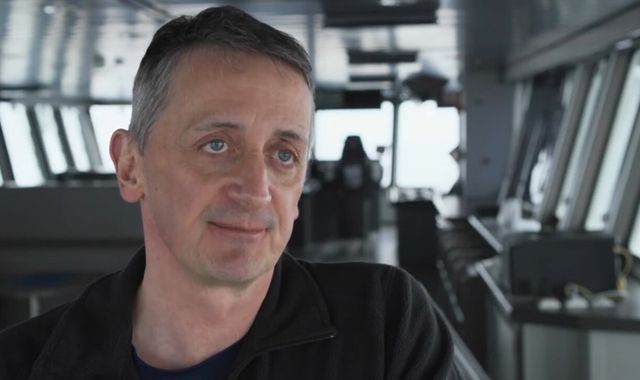
Each Monday, we speak to someone from a different profession to discover what it's really like. This week we chat to Professor Jon Copley, a marine biologist at the School of Ocean and Earth Science at the University of Southampton...
A typical salary for a marine biologist... starting at a UK university after completing a PhD qualification is around £35,000 and can reach around £75,000 at a UK university after a couple of decades.
I've witnessed perhaps some of the better and worse aspects of humanity on expeditions... on the better side: scientists who seldom agree about anything struck speechless and in tears of awe at what we're seeing for the first time as we explore the deep ocean, which gives me hope that we can be united in wonder at the astonishing world around us.
But on the worse side... regularly finding litter that has already reached those parts of our planet, before we've explored them for the first time. So that's our capacity as human beings: we can work together to achieve remarkable things, but we're also capable of such harmful selfishness.
Don't let your job define your identity... Define yourself by what you care about, which you may be able to pursue through your career, but also in your wider life outside your work.
The one thing I hate about my job is... the growing burden of administrative bureaucracy in research and teaching, which often seems to expand without providing clear benefits.
One of my most memorable moments was... discovering some hot springs on the ocean floor a mile and a half deep in the Antarctic, where volcanically heated water gushes out of the seabed and builds mineral spires a couple of storeys high, which are festooned with deep-sea animals. It's an astonishing colony of deep-sea life, as lush as any coral reef in shallow tropical waters, but in the dark and chilly Antarctic depths. There are piles of scarab-like white crabs jostling in the warm spring waters, heaving mounds of large brown snails, and meadows of yellow-stalked barnacles waving feather-like appendages to catch food. In total, there were more than 30 species of animals no one had ever seen before - a hidden Garden of Eden at the bottom of the ocean, where such an abundance of life was once thought impossible.
Every deep sea species that we discover has adapted to conditions that are very different from our world above the waves... Their adaptations can provide new insights for engineering and medicine. For example, a species of deep sea snail that I was involved in is teaching materials scientists better ways to make solar panels, from understanding how the snail forms tiny crystals of metal minerals on its body. There's also a new therapy for some types of prostate cancer that was developed from a molecule found in deep sea bacteria by other researchers. So the diversity of life in the deep ocean is like a library of ingenuity.
Find tips and personal finance news in the Money blog
Good communication skills are essential...You need to write and present compelling proposals to convince people to fund research projects, produce effective reports of your discoveries and how they advance our understanding, and provide clear summaries of issues for policymakers who are considering decisions that affect life in the ocean. On a fieldwork expedition, good communication is also vital to work effectively in a team of people in a high-stakes situation.
Deep-sea expeditions involve living and working for weeks to months aboard a research ship out on the ocean... and there's a couple of years of planning to get a ship in the right place, with the right equipment, and with all the diplomatic clearances that may be required if it's visiting an area under the jurisdiction of another country.
At sea, it's important to settle into a consistent daily routine to get through the weeks of long shifts... If your shift is 4am to 4pm, for example, that could involve setting your alarm for 3:30am, switching on your bunk light and letting its illumination wash over you for a couple of minutes to help bring you round, before jumping in the shower and getting dressed. Then it's fortunately a very short commute from your cabin to wherever you're working, perhaps grabbing a coffee from the galley on the way, ready for the handover from the previous shift before yours begins - and nothing annoys shipmates more than someone turning up late, delaying people from standing down at the end of their 12-hour shift. Then after your shift ends at 4pm, you only have four hours of personal time in which to get some exercise, either in the ship's gym or perhaps on deck if weather allows, take a more leisurely meal in the galley and socialise with colleagues, catch up on emails or perhaps talk to your family back home if the satellite link allows, do your laundry if needed, and then by 8pm you need to be back in your bunk.
If it's a week ashore... a day could involve giving lectures to students, taking them on our coastal research vessel for some fieldwork teaching, attending university meetings about our curriculum or research strategy.
The biggest threat to our oceans is... human selfishness.
If I could force world leaders to do one thing, it would be... realise that the environmental crisis threatening the resilience of our society is unprecedented in human history, and that systems rooted in our past are unlikely to be effective in tackling it.
The ocean has absorbed 90% of the extra heat trapped in the atmosphere by the additional greenhouse gases that we've put there... Warming waters are changing the distribution of marine life around the world, with some species moving towards the poles to stay at temperatures they can cope with. When a species moves into a new region, it can disrupt other species already living there, causing a cascade of changes in marine life.
Warming waters are only one impact from climate change... The ocean is also becoming more acidic from carbon dioxide dissolving in it, which can interfere with marine life that make skeletons or shells out of minerals that dissolve in more acidic conditions.
More from this series:
Criminal barrister on salaries
I'm a self-taught celebrity photographer
I'm a child psychiatrist
One thing happening in the deep ocean that I wish people knew about is... deoxygenation, which is a decline in the amount of oxygen in deep sea waters - and all the animals down there need oxygen like we do. Among the causes of that decline is a weakening of ocean currents bringing oxygen from shallow polar waters, where it dissolves into the ocean from the atmosphere into the deep ocean basins. That flow takes centuries, and the deep ocean is going to end up with 10% less oxygen because of changes that we've already wrought - their impact just hasn't spread through the ocean depths yet. And every day that we delay taking action to tackle climate change makes that 10% decline even worse.
The most useful thing anyone can do about it is... to vote for representatives who don't ignore or deny the reality of the situation and who are prepared to take meaningful action to tackle it.
Marine biology in academia is difficult to get into... because there are very few job openings at universities. But there are lots of opportunities to work as a marine biologist outside academia.
You can work as a marine biologist with a degree but... an additional year gaining a master's degree can be an advantage. As well as adequate technical knowledge, it's skills such as communication, team-working, organisation and leadership that set candidates apart - so anything that demonstrates and develops those skills is good, outside of just studying marine biology. For academic research, a PhD qualification is required, and that's usually a four-year apprenticeship to become an independent research scientist. So that can be eight years of training in total for that particular role.

(c) Sky News 2026: Marine biologist on salaries, tears and the one thing everyone could do to save the planet
 Local news content from CItiblog - read more at
  RAF base in Cyprus hit by drone strike, Ministry of Defence says
 UK plans mass evacuation as Iran strikes close Middle East airports
 Starmer denies U-turn claims after giving go-ahead for US to use UK military for strikes on Iran
 Fresh concerns at Glasgow's Queen Elizabeth University Hospital as mould and water ingress closes parts of cancer ward
 Do you want to ban kids from social media? The government is asking
 UK terror threat 'absolutely' under review after Iran strikes, defence secretary says
 Trump's war with Iran has become personal for people in Dubai
 Defence secretary reveals details of UK's Middle East operations - including taking down Iran drones